


Kasugai Fittings and Flanges
Featured ProductsPricesPlease do not hesitate to send us your inquiries anytime with convenience. Contact us today for your price inquiries and orderKasugai Fittings and FlangesSteel pipe fittings and flanges play an essential role in modern...
Kasugai Pipes
Featured ProductsPricesPlease do not hesitate to send us your inquiries anytime with convenience. Contact us today for your price inquiries and orderKasugai Pipesis a distinguished manufacturer and supplier of high-quality steel products based in...
Abrasion Resistant (AR Plate)
Featured ProductsPricesPlease do not hesitate to send us your inquiries anytime with convenience. Contact us today for your price inquiries and order Abrasion Resistant (AR) Plates PhilippinesAbrasion-resistant (AR) steel plate is a high-carbon alloy...
Benkan Pipe Fittings
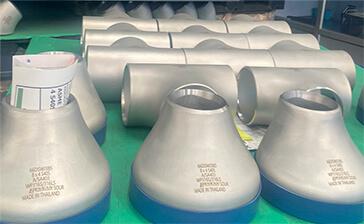
Featured ProductsPricesPlease do not hesitate to send us your inquiries anytime with convenience. Contact us today for your price inquiries and orderBenkan Pipe Fittings PhilippinesConreducer BenkanBenkan pipe fittings are a...

Pipe Coatings
Featured ProductsPricesPlease do not hesitate to send us your inquiries anytime with convenience. Contact us today for your price inquiries and orderPipe Coatings For Sale Philippines Pipe coatings protect against...

Steel Pipes For Sale Philippines
The Role of Steel Pipes in the Philippines
In the Philippines steel pipes are not just hardware but instead they represent important components (“veins and arteries”) within the country’s rapidly evolving urbanized environment. Due to the unique topography and climatic conditions of the Philippines, steel pipes are utilized across various sectors, providing significant contributions to critical sectors.
Infrastructure & Resilience
The Philippines is part of the Pacific Ring of Fire which makes it vulnerable to numerous typhoons every year; therefore steel pipes have become the primary material for many major infrastructure projects.
- Seismic Capability: Steel has more flexibility than concrete does, which gives it an advantage over rigid concrete piping when it comes time to withstand ground-motion from earthquakes without suffering from immediate failure.
- Foundation Piling: For those buildings constructed in Metro Manila or Cebu and bridges built to span any number of rivers across the country, it is imperative that these structures sit on deep foundations into soft coastal soils; thus making use of steel pipe piles crucial to achieve the required depth.
Water & Sanitation
The modernization of the nation’s water distribution systems, including the services provided by companies such as Maynilad and Manila Water, in addition to water districts providing services throughout the regions also illustrates how critical the use of steel pipes are utilized.
- Reliability at High Pressure: Steel pipes of considerable diameter are classified as ‘primary mains’ and can therefore carry substantial amounts of water (from sources like the Angat dam) to many different treatment facilities.
- Durability: Modern coatings (such as epoxy and galvanizing) protect pipes from high humidity and corrosive salt air that are typical of an archipelago; thus, providing clean and safe water for communities will continue for many decades.
Energy and Power Sector
Power generation in the Philippines relies heavily on steel pipes, which are used mainly for energy security purposes and are the relatively “behind the scenes” of energy generation.
For example, in renewable energy generation, specialized steel pipes transport high-pressure steam from the ground to turbines in geothermal power plants (such as in Tiwi, Leyte).
In terms of oil and gas, the majority of oil and natural gas will be transported with the relatively high levels of steel pipe, with one major example being in offshore extraction projects such the Malampaya.
Agricultural and Industrial Growth
The Philippine economy relies heavily on both the agricultural and manufacturing sectors, and both will continue to grow as a result of government investments into large-scale rail systems.
To support this growth in agriculture, irrigation systems (large, public water supply pipes and associated irrigation systems) will utilize steel pipes to transport water from remote areas to irrigate rice fields and plantations.
In the manufacturing sector, steel piping can be found in HVAC systems in food processing facilities and factories producing electronics, as well as in fire protection systems (i.e. sprinklers) and raw material moving through steel pipes.
Economic Contributions
The local steel pipe industry (such as Mayer Steel Products, Supreme Steel Products, and Goodyear Steel) has a significant economic contribution to the GDP of the Philippines.
By choosing a locally manufactured steel pipe, there is an opportunity to provide jobs for Filipinos while also reducing the reliance on imported steel.
Steel pipes that comply with Philippine National Standards (PNS) ensure that local building codes and safety standards are met.
Summary Table: Why Steel?
|
Factor |
Benefit in the Philippines |
|
Durability |
Resists damage during extreme weather events. |
|
Versatility |
Used in everything from decorative railings to massive water mains. |
|
Safety |
High fire resistance and structural integrity for urban density. |
|
Cost-Effectiveness |
Long lifespan reduces the need for frequent, disruptive repairs in busy cities. |
Carbon Steel Pipes
Seamless Steel Pipes
Black Iron Pipe
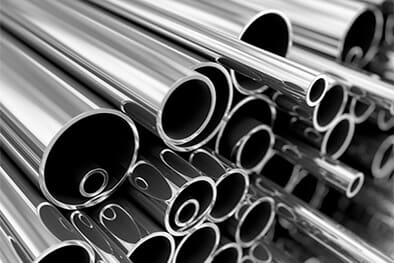
Stainless Steel Pipes
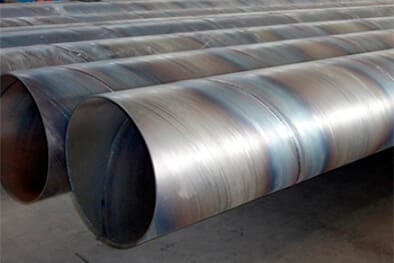
Spiral Welded Steel Pipes
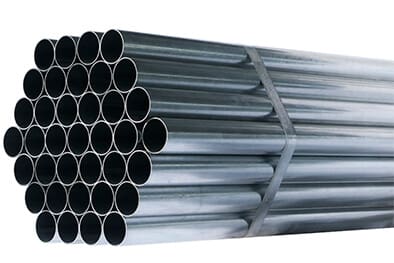
Galvanized Iron Pipes
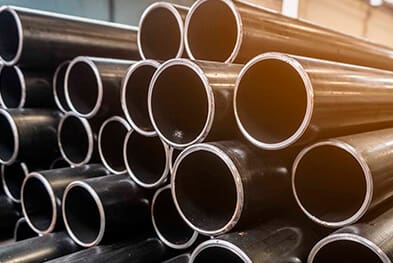
| CARBON STEEL | A/ASTM A106 Gr.B/C API 5L Gr.B SA/ASTM A53-B; SGP; ASTM A333Gr.6/3; APL 5L X42, 52,60,65,70; ASTM A139 (Spiral Pipe); ASTM 795 JIS G3452, JIS G 3454 |
| Austenitic | 201, 202, 301, 301L, 302, 303, 304, 304L, 304N, 305, JIS G3459 |
| Ferritic | 317L, 321, 347.904L,253Ma, 254SMO. 405, 409, 409L, 410.410S, 410L, 430, 430F, 436, 436L, 439, 443, 444 |
| Martensitic | 403, 414, 416, 420J1, 420J2, 431 440A, 440B, 440C, 446 |
| Duplex | 15-5PH, 17-4PH/630, 17-7PH, 660A, 660B, 660C, 660D. S31803/2205, 532250, 532750, 532760, $31500, $31500, 32101, 532304 |
FREQUENTLY ASKED QUESTIONS
What are steel pipes in the Philippines?
The production of steel pipes involves carbon steel and galvanized steel to create hollow cylindrical tubes, which serve as common construction materials in the Philippines. The country needs these materials because they build various structures through their strong construction materials. These remain resistant to weather damage.
Where are steel pipes applied?
These types of pipes are extensively utilized in numerous applications, including plumbing lines and fire suppression systems, as well as providing support for houses inspired by “bahay na bato” architecture. Another application of steel pipes involves the use of pipes in scaffolding, handrails, and piling of floods-prone places throughout the archipelago.
What is the most common steel pipe?
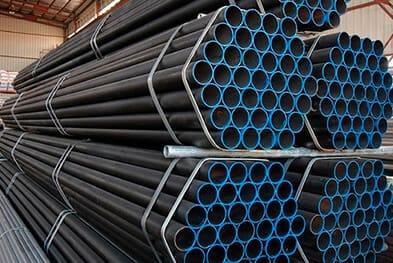
The standard steel pipe used in the Philippines consists of Galvanized Iron (G.I.) pipes. The steel pipes contain a zinc protective layer which makes them perfect for residential plumbing and outdoor railings because they prevent rusting from the humid coastal air which contains salt.
What is the most durable type of pipe?
Stainless steel pipes are the “heavyweight champions” of durability. Unlike standard carbon steel, they resist extreme pressure and chemical corrosion. For long-term infrastructure, they outlast PVC or G.I. pipes, making them a cost-effective investment despite the higher initial price tag.
What is the most durable type of pipe?
Stainless steel pipes are the “heavyweight champions” of durability. Unlike standard carbon steel, they resist extreme pressure and chemical corrosion. For long-term infrastructure, they outlast PVC or G.I. pipes, making them a cost-effective investment despite the higher initial price tag.
Which steel pipe is best?
There is no single “best,” only the right tool for the job. For water lines, G.I. pipes are preferred. For structural frames, Black Iron (B.I.) pipes are ideal. For luxury builds or chemical transport, Stainless Steel (Grade 304 or 316) is the premium choice for longevity.
What steel pipe does not rust?
Stainless steel achieves its rust resistance because chromium creates a protective layer which prevents corrosion. The zinc coating on Galvanized pipes protects them from rust for multiple years but the pipes will start to corrode once the coating disappears. For 100% rust-free performance in salty coastal air, always choose high-grade stainless steel.
Steel Pipe Supplier Prices
VSteel Metal Asia’s dedicated team in the Philippines ensures service excellence and customer satisfaction, delivering high-quality steel products at competitive prices for projects nationwide.
Our Steel Pipe product prices will be available based on the Philippine market, specifically Metro Manila, Metro Cebu, and Metro Davao. Therefore, you are assured of a fair trade from us.
