


Kasugai Fittings & Flanges
Featured ProductsPricesPlease do not hesitate to send us your inquiries anytime with convenience. Contact us today for your price inquiries and orderKasugai Fittings and Flanges For Sale PhilippinesSteel pipe fittings and flanges play an...
Kasugai Pipes
Featured ProductsPricesPlease do not hesitate to send us your inquiries anytime with convenience. Contact us today for your price inquiries and orderKasugai Pipesis a distinguished manufacturer and supplier of high-quality steel products based in...
Abrasion Resistant (AR Plate)
Featured ProductsPricesPlease do not hesitate to send us your inquiries anytime with convenience. Contact us today for your price inquiries and order Abrasion Resistant (AR) Plates PhilippinesAbrasion-resistant (AR) steel plate is a high-carbon alloy...
Benkan Pipe Fittings
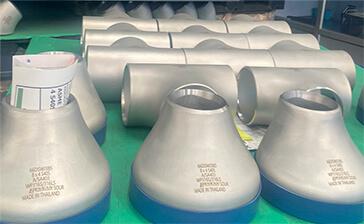
Featured ProductsPricesPlease do not hesitate to send us your inquiries anytime with convenience. Contact us today for your price inquiries and orderBenkan Pipe Fittings PhilippinesConreducer BenkanBenkan pipe fittings are a...

Pipe Coatings
Featured ProductsPricesPlease do not hesitate to send us your inquiries anytime with convenience. Contact us today for your price inquiries and orderPipe Coatings For Sale Philippines Pipe coatings protect against...

Copper Tubes & Copper Pipes Supply Philippines
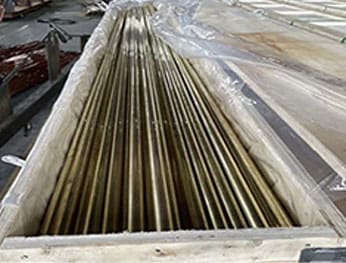
Copper Pipes are commonly used in the construction industry for water supply lines and refrigerant lines in HVAC (heating, cooling, and air-conditioning) systems. Copper pipes can be manufactured as soft or rigid copper and offer excellent corrosion-resistance and reliable connections.
The three most common types of copper pipe used in residential and commercial construction are Type K, Type L, and Type M. A fourth type, used for drain-waste-vent, or DWV, piping, can be found in some older homes.
Stainless steel characteristically has a minimum Of 10.5% chromium by weight. means has a larger percentage of chromium in it as compared to carbon steel, which is what grants it the ability to resist corrosion.
What are The Advantages of Copper Tubes?
Strong and long lasting, copper tube is the preferred choice of modern building project contractors for all kinds of residential and commercial buildings plumbing, heating and cooling installations.
The primary reasons for this are:
Copper is economical.
The construction material’s combination of easy handling, forming and joining permits savings in installation time, material and overall costs. Long-term performance and reliability mean fewer callbacks, and that makes copper the ideal, cost-effective building tubing material.
Copper is lightweight.
Copper tube does not require the heavy thickness of iron or threaded pipe of the same internal diameter. This means copper is cheaper to transport, handles more easily and, when installed, takes less space than other construction materials.
Copper is formable.
Because copper tube can be bent and formed, it is frequently possible to eliminate elbows and joints. Smooth bends permit the tube to follow contours and corners of almost any angle. With soft temper tube, particularly when used for renovation or modernization building projects, much less wall and ceiling space is necessary.
Copper is easy to join.
Copper tube can be joined with capillary fittings. These fittings save material and make smooth, neat, strong and leak-proof joints. No extra metal thickness or weight is required to compensate for copper material removed by threading.
Copper is relatively safe.
Copper tube will not burn or support combustion or decompose to toxic gases. Therefore, it will not carry fire through floors, walls and ceilings.
Copper is dependable.
Copper tubes are manufactured to well-defined industrial standards and marked with permanent identifications so you know exactly what it is and who made it.
Copper is long-lasting.
It has excellent resistance to corrosion and scaling, high mechanical strength, high-temperature resistance and lifetime resistance to Ultraviolet Ray (UV) degradation. Copper assures long, trouble-free service, which translates to satisfied customers and systems that last a long time.
Copper is 100% recyclable.
Copper stands alone as an engineering construction material that can be recycled over and over without degradation in material content or properties. This advantage combined with copper’s proven long-lasting durability means that no copper used in a building today needs to enter a landfill.
Copper Tubes/Pipes Applications
Type K Copper Tubes/PipeType 304
Type K Copper Tubes/PipeType 304
Type L Copper Tubes/Pipes
Used for interior plumbing, fire protection, and some HVAC applications. It is available in rigid and flexible forms and can be used with sweat, compression, and flare fittings. Type L is considered the most common type of copper piping, as it can be used in many more applications than Type K. Flexible Type L copper can be used to repair or replace old water lines, although rigid tubing is more durable. Type L also can be used outside the home where it will be directly exposed. Type L copper is thinner than Type K but thicker than type M.
Type M Copper Tubes/Pipes
Copper Tubes/Pipes Applications
| ASTMB88 | Standard Specification for Seamless Copper WaterTube |
| ASTMB4 | Standard Specification for Seamless CopperPipe,Standard Sizes |
| ASTMB68 | Standard Specification for Seamless CopperTube,Bright Annealed |
| ASTMB75 | Standard Specification for Seamless CopperTube |
| ASTMB280 | Standard pecification for Seamless CopperTube for Air Conditioning and Refrigeration FieldS ervice |
| ASTMB447 | Standard Specification for Welded CopperTube. |
| ASTMB837 | Standard specification for Seamless copperTube for Natural Gas and Liquefied Petroleum(LP) Gas Fuel Distribution Systems. |
Copper To American Standard ASTM B8-type L
| NOMINAL SIZE(INCH) |
ACTUAL(INCH) O.D. W.I. |
ACTUAL(MM) O.D. W.I. |
WEIGHT (kg/m) |
PRESSURE (kg/cm) |
|---|---|---|---|---|
| 1/8” | 1/4”0.028 | 6.250.71 | 0.112 | 84.4 |
| 1/4” | 3/8”0.030 | 9.520.76 | 0.187 | 61.7 |
| 3/8” | 1/2”0.035 | 12.700.89 | 0.295 | 52.8 |
| 1/2” | 5/8”0.040 | 15.881.02 | 0.426 | 48.1 |
| 5/8” | 3/4”0.042 | 19.051.07 | 0.54 | 42.2 |
| 3/4” | 7/8”0.045 | 2.2.221.14 | 0.675 | 8.8 |
| 1” | 1-8/8”0.050 | 28.581.27 | 0.974 | 34 |
| 1-1/4” | 1-3/8”0.055 | 34.921.40 | 1.32 | 31 |
| 1-1/2” | 1-5/8”0.060 | 41.281.52 | 1.7 | 28 |
| 2” | 2-1/8”0.070 | 53.981.78 | 2.61 | 24.9 |
| 2” | 2-5/8”0.080 | 6.682.03 | 3.69 | 22.9 |
| 3” | 3-1/8”0.090 | 79.382.29 | 4.96 | 22 |
| 4” | 4-1/8”0.110 | 104.782.79 | 7.99 | 20.4 |
| 5” | 5-1/8”0.125 | 130.783.18 | 11.3 | 18.6 |
| 6” | 6-1/8”0.140 | 155.583.56 | 15.2 | 17.6 |
| 8” | 8-1/8”0.200 | 207.015.08 | 28.7 | 19.2 |
| 10” | 10-1/8”0.250 | 257.186.35 | 44.7 | 9.2 |


Your content goes here. Edit or remove this text inline or in the module Content settings. You can also style every aspect of this content in the module Design settings and even apply custom CSS to this text in the module Advanced settings.
Your content goes here. Edit or remove this text inline or in the module Content settings. You can also style every aspect of this content in the module Design settings and even apply custom CSS to this text in the module Advanced settings.
FREQUENTLY ASKED QUESTIONS
How is copper tube sizing calculated for a VRF system?
VRF pipe sizing is a two-step process: the main header is sized based on the Outdoor Unit (ODU) capacity, while downstream branch pipes are sized based on the total capacity of the Indoor Units (IDU) they serve. Proper sizing requires using manufacturer-specific refnets (Y-joints) and adhering to ASTM B280 standards to ensure correct refrigerant velocity and pressure handling.
Can PPR PN20 be used instead of Type L copper for VRF systems?
No. While PPR PN20 is an excellent, cost-effective choice for water-based plumbing and chilled water lines in the Philippines, it cannot withstand the high operating pressures of VRF refrigerants (like R-410A or R-32). Type L seamless copper tubing (ASTM B280) is the industry standard required for safety, durability, and compliance with the Philippine Mechanical Code.
When should I use 15% vs. 5% silver brazing rods?
15% silver rods (BCuP-5) should be used for joints subjected to high vibration, such as connections near the compressor, due to their higher ductility. 5% silver rods are suitable for standard stationary joints. Always perform brazing under a nitrogen purge to prevent internal oxidation (soot), which can clog Electronic Expansion Valves (EEVs).
How do I identify genuine Type L copper pipes in the Philippines?
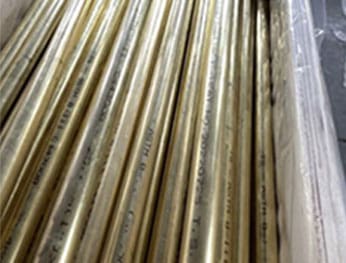
Genuine Type L copper is identified by a permanent blue ink streak or stamp indicating ‘Type L’ and compliance with ASTM B280 or ASTM B88. Professionals should verify the wall thickness and weight; ‘substandard’ or counterfeit pipes are often lighter and thinner, posing a burst risk under high-pressure VRF cycles.
What are the piping limits and oil trap requirements for VRF systems?
Modern VRF systems can support actual piping lengths of up to 165 meters. Regarding oil traps, while older standards required them every 5-10 meters on vertical risers, many modern inverter VRF units use automated oil recovery cycles and may prohibit traps. Always defer to the manufacturer’s installation manual to maintain the compressor warranty.
Copper Tube & Pipe Supplier Prices
VSteel Metal Asia’s dedicated team in the Philippines ensures service excellence and customer satisfaction, delivering high-quality steel products at competitive prices for projects nationwide.
Our Copper Tube and Copper Pipe prices will be available based on the current Philippine market, specifically Metro Manila, Metro Cebu, and Metro Davao. Therefore, you are assured of a fair trade from us.
